Most women don’t wake up one morning and decide to think about their pelvic floor. I certainly didn’t.
It usually starts quietly. Maybe you laugh a little too hard and feel a tiny leak. Maybe after having a baby, something just feels... different down there. A heaviness. A sense that things aren't quite holding together the way they used to. Or maybe you simply notice your bladder isn't as dependable as it once was.
And here's what almost everyone does: we shrug it off. We tell ourselves this is just part of getting older, or the price of motherhood, or something we have to live with.
That's what I used to think too. But it's not true.
Your pelvic floor is made of muscles. Real, actual muscles—just like the ones in your arms or your legs. And here's the beautiful thing about muscles: they respond. They get stronger when you work them. They don't care how old you are or how many babies you've carried. They just need a little attention.
That's exactly where Kegel exercises come into the picture.
I'll keep this simple.
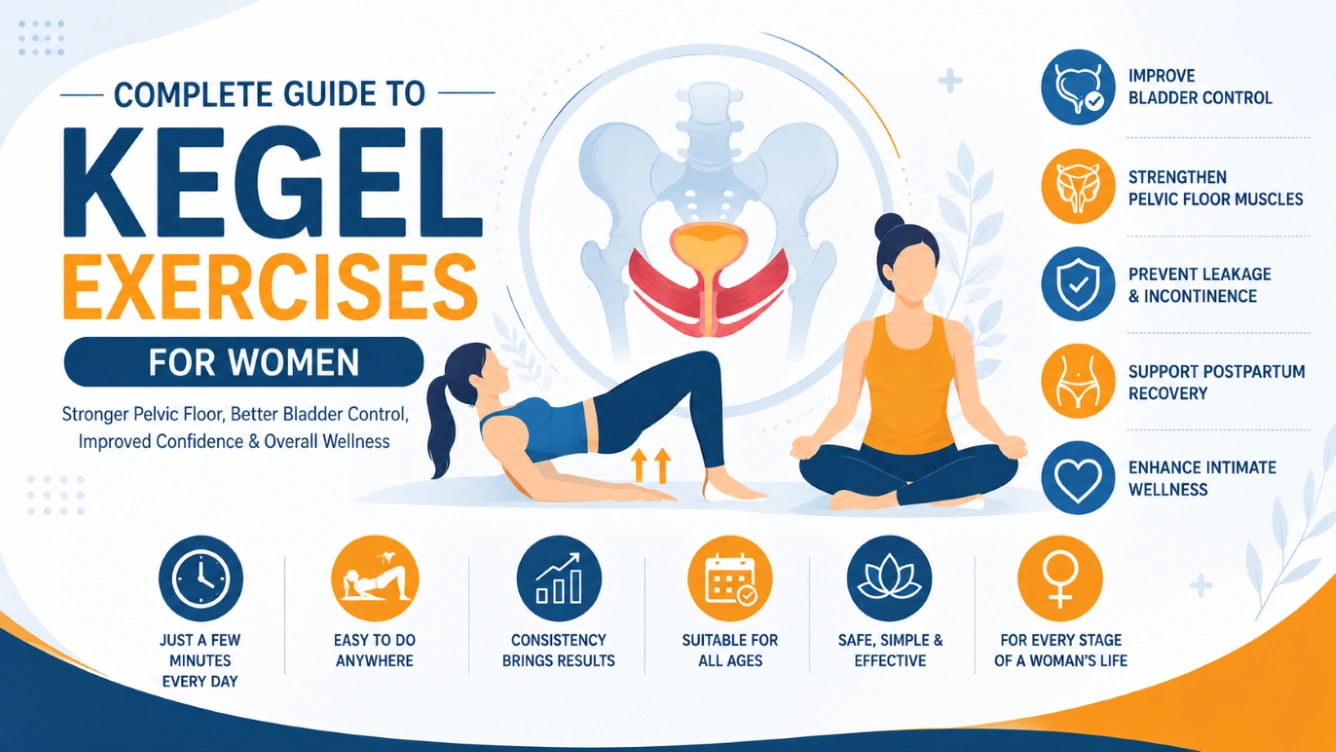
Kegels are small, focused contractions that strengthen your pelvic floor muscles—the group of muscles that sit like a hammock at the base of your pelvis, holding up your bladder, uterus, and bowel.
When those muscles are strong, everything stays supported. You feel in control. When they're weak, that's when leaks, heaviness, and instability start creeping in.
A doctor named Arnold Kegel developed these exercises back in the 1940s. His goal was to help women avoid surgery for bladder problems. Decades later, these same simple movements are still recommended by doctors and physical therapists worldwide. That should tell you something.
Your pelvic floor doesn't clock off. It works all day, every day, doing things you probably never think about:
Keeping your bladder, uterus, and bowel supported
Controlling urine flow so you decide when to go
Preventing leaks when you cough, sneeze, or exercise
Stabilising your pelvis and lower back
Helping your body recover after childbirth
And yes, playing a role in how you experience intimacy
But like any muscle group, it can weaken over time. Pregnancy, childbirth, menopause, chronic coughing, heavy lifting, carrying extra weight—all of these take a toll.
The good news? You can rebuild that strength. And it doesn't require a gym membership, fancy equipment, or hours of your week.
You don't need to have symptoms to benefit from a stronger pelvic floor. But these exercises are especially helpful if you:
Leak a little when you laugh, cough, or sneeze
Are pregnant or recently gave birth
Are approaching menopause or in the thick of it
Lift heavy things regularly (kids, groceries, weights at the gym)
Have been told you have mild pelvic organ prolapse
Simply want to stay strong and prevent problems down the road
Honestly, there's almost no woman who wouldn't benefit from knowing how to do these properly.
Here's where most people mess up: they squeeze the wrong muscles.
It took me a while to get this right too. The trick is to imagine you're trying to stop the flow of urine mid-stream, or trying to hold in gas. The muscles that clench when you do that—those are your pelvic floor muscles.
A quick heads-up though: only use the "stopping urine" trick once or twice to identify the muscles. Don't make it a regular habit, because interrupting your flow repeatedly can actually cause bladder issues.
When you're doing a Kegel correctly:
Your belly should stay soft and relaxed
Your thighs shouldn't tighten
Your buttocks shouldn't clench
You should breathe normally the whole time
If your stomach or hips are doing all the work, you're recruiting the wrong team. Stop, reset, and try again.
Forget about doing hundreds of these. Technique beats quantity every time.
Step 1: Get comfortable.
Lie on your back with your knees bent when you're starting out. Once your muscles get stronger, you can do them sitting, standing, wherever.
Step 2: Squeeze and lift.
Gently tighten those pelvic floor muscles—think "squeeze and lift upward." Don't hold your breath.
Step 3: Hold.
Aim for 3 to 5 seconds at first. As you get stronger, work up to 8 or 10 seconds. But don't rush it.
Step 4: Let go completely.
The release matters just as much as the squeeze. Let the muscles fully relax for the same amount of time you held.
Step 5: Repeat.
Aim for 10 repetitions, three times a day. That's it. Quality over speed, always.
When I started, I did pretty much everything wrong. I held my breath. I clenched my stomach. I rushed through like it was a race.
Here's what to avoid:
Holding your breath (your muscles need oxygen to work)
Tightening your butt or thighs
Sucking in your stomach too hard
Rushing through reps just to get them done
Forgetting to fully relax between squeezes
Going overboard and exhausting the muscles
Your pelvic floor can get tired just like any other muscle. Rest and balance matter.
This isn't a quick-fix thing. You won't do Kegels for two days and wake up transformed.
Most women start noticing small changes within 4 to 8 weeks of consistent practice. Bigger, more noticeable improvements usually take 2 to 3 months.
What kind of changes? Better bladder control. Fewer leaks during exercise or when you sneeze. A feeling of support rather than heaviness. More confidence moving through your day.
Consistency wins here. A few minutes daily, done right, beats intense sessions done once in a while.
Pregnancy puts enormous pressure on the pelvic floor. A growing baby, hormonal shifts—your body is doing something extraordinary, but those muscles take a hit.
With your doctor's okay, gentle Kegels during pregnancy can help reduce leaks, build muscle awareness, and prepare your body for childbirth. And after delivery, they're one of the best things you can do to support healing and regain strength.
Go slow. Be patient. Every recovery looks different.
As oestrogen levels drop during menopause, pelvic tissues naturally lose some elasticity and tone. This can lead to stress incontinence, overactive bladder, or that dreaded "something's falling out" sensation.
Regular pelvic floor work helps counteract these changes. It won't reverse menopause, but it can help you stay active, dry, and confident for years longer.
This isn't something people talk about openly, but I'll say it: strong pelvic floor muscles support healthy blood flow, better muscle awareness, and greater pelvic stability. Many women report feeling more comfortable and more connected during intimacy.
It's not a magic fix for every concern, but it's absolutely part of the bigger picture of pelvic wellness.
Knowing how to do Kegels isn't the hard part. Remembering to actually do them? That's the battle.
Here's what worked for me—attach them to something you already do daily:
While brushing your teeth (morning and night—that's two sessions right there)
When you sit down at your desk
During TV ad breaks
Stopped at a traffic light
Right before you fall asleep
The exercises are invisible. You can do them anywhere, and no one will ever know. Use that to your advantage.
Kegels help a lot of women, but they're not the answer for everything.
Talk to your doctor or a pelvic floor physiotherapist if:
Leaking continues despite months of consistent practice
You feel pain when you try to do the exercises
You genuinely can't tell if you're squeezing the right muscles
There's a sensation of pressure or bulging in your vagina
Things don't improve and it's affecting your daily life
There's no shame in getting expert help. A pelvic floor physio can assess exactly what's happening and build a programme tailored to your body.
Kegels are simple. Almost laughably simple. But don't let that fool you—what they can do for your long-term health is remarkable.
We're not just talking about fewer leaks. We're talking about bladder health, core stability, pregnancy recovery, menopause management, and the quiet confidence that comes from feeling strong and in control of your own body.
Results take time. Like any form of strength training, your pelvic floor gets stronger through regular, correct practice. Give it a few minutes each day, and those small efforts stack up into something that lasts.
Whether you're a new mum, navigating menopause, or simply deciding it's time to look after yourself a little better—this is your starting point.
Start today. Keep showing up. Let those tiny daily efforts build something solid from the inside out.